
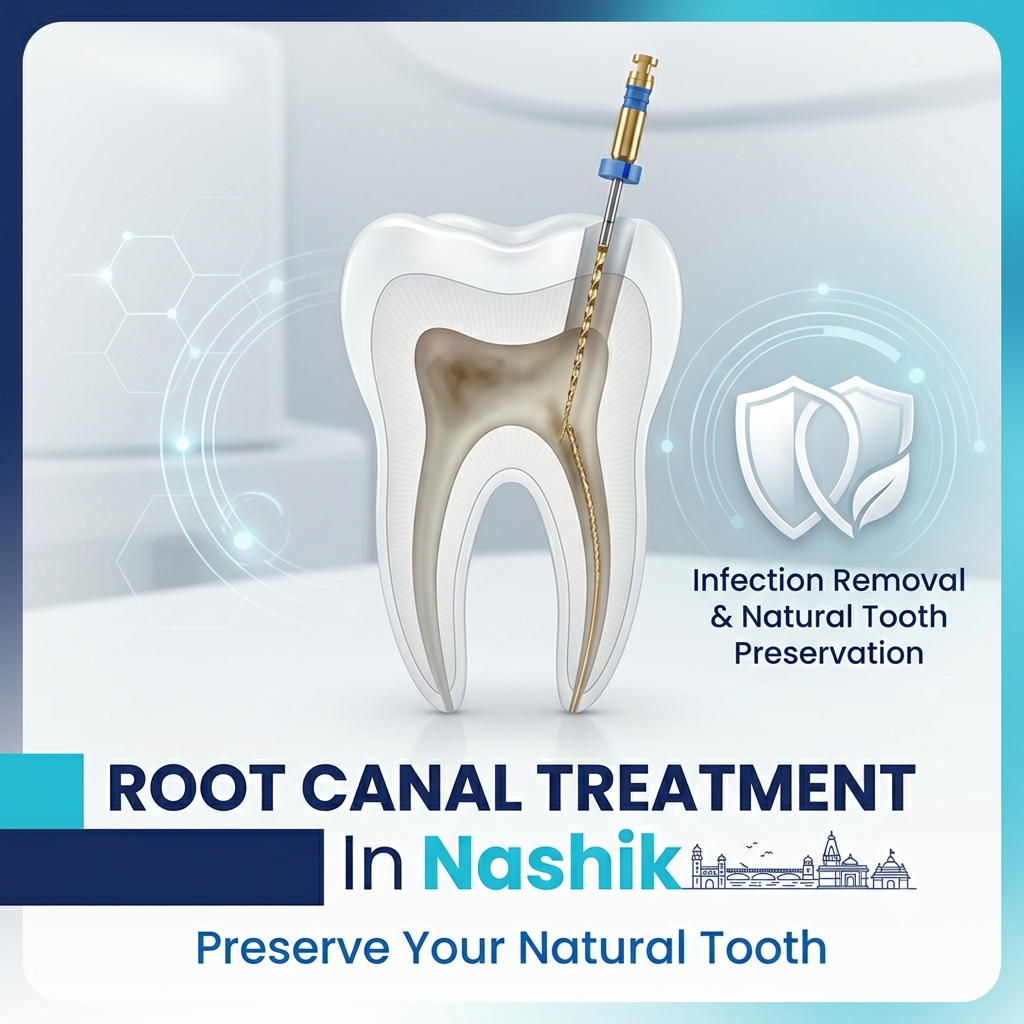
Root Canal Treatment in Nashik A persistent toothache should not be ignored. When decay, injury, or infection reaches the inner part of a tooth, Root Canal Treatment (RCT) may be recommended to remove the infected tissue and preserve the natural tooth. If you are searching for Root Canal Treatment in Nashik, Dental Autograph provides comprehensive dental evaluation and endodontic care with a focus on preserving natural teeth whenever possible. Located near Jatra Hotel, Nashik, Dental Autograph offers diagnosis and treatment planning for patients experiencing tooth pain, sensitivity, swelling and other dental concerns. What Is Root Canal Treatment? Root Canal Treatment is a dental procedure used to treat infection or inflammation inside a tooth. The inner part of a tooth contains the pulp, which consists of nerves and blood vessels. Deep dental decay, cracks, trauma or repeated dental procedures can sometimes affect this tissue. During RCT, the dentist carefully: Examines and diagnoses the affected tooth. Accesses the infected or inflamed pulp. Removes the affected tissue. Cleans and disinfects the root canal system. Shapes the canals for proper sealing. Fills and seals the cleaned canals. Recommends appropriate restoration, such as a crown, when required. The objective is to eliminate the source of infection and preserve the natural tooth whenever it can be predictably restored. When Do You Need Root Canal Treatment? A tooth may require root canal treatment when the pulp becomes irreversibly inflamed or infected. Common symptoms can include: Persistent toothache Pain while chewing or biting Prolonged sensitivity to hot or cold Swelling around the tooth Tenderness around the gums A deep cavity A cracked or injured tooth Discoloration of the tooth A recurring dental infection However, symptoms alone cannot determine whether you need an RCT. A dentist needs to examine the tooth and, when appropriate, use dental X-rays or other diagnostic methods. Why Is Root Canal Treatment Done? The primary goal of RCT is to treat disease inside the tooth while preserving the natural tooth structure as much as possible. Depending on the individual case, root canal treatment may help: Remove infected or damaged pulp tissue Control infection within the tooth Relieve symptoms associated with the affected tooth Preserve the natural tooth Maintain chewing function Avoid extraction when the tooth can be predictably restored Preserving a natural tooth can often be beneficial for maintaining normal oral function. What Happens During Root Canal Treatment? 1. Dental Examination The dentist evaluates your symptoms, examines the tooth and may recommend diagnostic imaging to determine the extent of the problem. 2. Treatment Planning After diagnosis, the dentist discusses whether root canal treatment is appropriate and explains the proposed treatment and restoration. 3. Cleaning the Root Canals The affected pulp tissue is removed, and the root canal system is carefully cleaned and disinfected. 4. Filling and Sealing The cleaned canals are filled and sealed to help prevent further bacterial contamination. 5. Final Restoration Depending on how much tooth structure remains, a filling, crown or another suitable restoration may be recommended to restore the tooth’s function and protect it from further damage. Is Root Canal Treatment Painful? Modern dental techniques and local anesthesia are used to make root canal treatment as comfortable as reasonably possible. Some patients may experience sensitivity or mild discomfort after treatment, particularly when the tissues around the tooth have been inflamed. Your dentist can provide appropriate post-treatment instructions based on your individual situation. If you have significant or persistent pain after treatment, contact your dentist for evaluation. How Long Does Root Canal Treatment Take? The duration of root canal treatment varies depending on factors such as: Which tooth is being treated Number and shape of the root canals Severity of infection or inflammation Complexity of the case Whether additional treatment is required Some cases can be completed in fewer appointments, while more complex cases may require additional visits. Your dentist can provide a more accurate estimate after examining your tooth. What Happens After Root Canal Treatment? Following RCT, the tooth may need a suitable permanent restoration depending on the amount of remaining tooth structure. A crown may be recommended for certain teeth to provide additional protection against fracture. Good oral hygiene and regular dental check-ups remain important even after successful root canal treatment. Can a Root Canal Treated Tooth Get Infected Again? Yes. Although root canal treatment is intended to eliminate infection from the treated canal system, a previously treated tooth can sometimes develop problems again. Possible reasons may include: Persistent or recurrent infection Complex canal anatomy New decay Leakage around a restoration Tooth fracture Incomplete healing In selected cases, Repeat Root Canal Treatment (Re-RCT) may be considered after appropriate diagnosis. Root Canal Treatment vs Tooth Extraction When a tooth is severely infected or damaged, patients may wonder whether extraction is the better option. If the natural tooth can be predictably treated and restored, preserving it may be considered. Extraction may be necessary when a tooth cannot be predictably restored or has other significant structural problems. The appropriate choice depends on the condition of the tooth, surrounding tissues, bone support and overall treatment plan. A dental examination is essential before making this decision. Frequently Asked Questions About Root Canal Treatment Is RCT better than tooth extraction? When a tooth can be predictably treated and restored, root canal treatment can allow the natural tooth to remain in the mouth. However, extraction may be necessary for teeth that cannot be predictably restored. Your dentist can recommend the appropriate option after examination. How do I know if I need a root canal? Persistent tooth pain, prolonged hot or cold sensitivity, pain while chewing, swelling or deep decay can be signs of a problem involving the tooth’s pulp. A dental examination and appropriate diagnostic tests are needed to determine whether RCT is required. Can a root canal save my natural tooth? One of the main purposes of root canal treatment is to treat disease inside the tooth and preserve the natural tooth when it can be predictably restored. How long does a root canal take?
Full Mouth Rehabilitation in Nashik: Restore Your Smile, Function, and Confidence
If you’re dealing with multiple dental problems at once — worn-down teeth, missing teeth, chronic jaw pain, or years of neglected dental issues — a single filling or crown won’t solve it. This is where full mouth rehabilitation in Nashik comes in. At Dental Autograph, we offer a complete, personalized approach to rebuilding your oral health from the ground up, combining multiple treatments into one coordinated plan. In this blog, we’ll walk you through what full mouth rehabilitation actually involves, who needs it, and why choosing the right dental team near Jatra Hotel, Nashik, makes all the difference. What Is Full Mouth Rehabilitation? Full mouth rehabilitation is a comprehensive dental treatment plan designed to restore all the teeth in your mouth — both upper and lower — to full function and aesthetics. Unlike a single procedure that targets one tooth or one issue, full mouth rehabilitation looks at your bite, gums, jaw joint, and every individual tooth together. Depending on your specific needs, full mouth rehabilitation in Nashik at Dental Autograph may include a combination of: Dental implants for missing teeth Root canal treatment for infected or damaged teeth Crowns and bridges for structural support Orthodontic correction for bite alignment Gum (periodontal) treatment Cosmetic restorations for a natural-looking smile Every treatment plan is built around your unique oral condition — there’s no one-size-fits-all approach. Who Needs Full Mouth Rehabilitation? You may be a candidate for full mouth rehabilitation if you experience any of the following: Multiple missing or severely damaged teeth Chronic jaw pain or difficulty chewing Teeth worn down from grinding (bruxism) Gum disease affecting several teeth A combination of old, failing dental work (crowns, fillings, bridges) Injury or trauma affecting several teeth at once If dental issues are affecting your ability to eat, speak, or smile with confidence, a rehabilitation-focused evaluation is a good place to start. Why Full Mouth Rehabilitation Requires a Specialist’s Approach Full mouth rehabilitation isn’t just about fixing individual teeth — it’s about making sure your bite, jaw joint, and remaining natural teeth all work together long-term. A poorly planned rehabilitation can lead to further complications down the line. At Dental Autograph, this process is led by Dr. Rutuja Fuldeore (MDS – Conservative Dentistry & Endodontics), whose specialization in root canal treatment and tooth preservation plays a central role in rehabilitation planning. Wherever possible, natural teeth are preserved rather than extracted, since healthy natural teeth generally offer better long-term function than replacements. What to Expect During Treatment Full mouth rehabilitation is typically carried out in planned phases rather than a single visit: Comprehensive Evaluation — X-rays, bite assessment, and a full oral health check. Treatment Planning — A sequenced plan covering which procedures are needed and in what order. Foundational Treatment — Addressing infections, gum health, and structural issues first (e.g., root canals, extractions if unavoidable). Restorative Phase — Implants, crowns, bridges, or orthodontic correction to rebuild function. Final Aesthetics — Fine-tuning the smile’s appearance once the functional foundation is complete. The exact number of visits and treatment duration depends entirely on the complexity of your case. Benefits of Full Mouth Rehabilitation Restored ability to chew and speak comfortably Improved long-term oral health, not just a temporary fix A natural-looking, confident smile Reduced risk of further tooth loss or complications One coordinated treatment plan instead of fragmented, reactive dental visits Why Choose Dental Autograph for Full Mouth Rehabilitation in Nashik Located near Jatra Hotel, Nashik, Dental Autograph combines modern dental technology with a conservative, tooth-preserving philosophy. Every full mouth rehabilitation plan is designed around your specific oral condition, with a strong emphasis on long-term outcomes rather than quick fixes. Whether your case involves a few teeth or requires a complete smile rebuild, our team evaluates your oral health holistically before recommending treatment. Frequently Asked Questions How long does full mouth rehabilitation take? Treatment timelines vary based on the number of procedures involved — some plans are completed in a few weeks, while more complex cases may take several months across multiple phases. Is full mouth rehabilitation painful? Individual procedures like root canals or implant placement are performed under local anesthesia, and most patients report manageable discomfort that’s well-controlled through the treatment plan. Does full mouth rehabilitation always involve implants? Not necessarily. Some patients need implants for missing teeth, while others may only require restorative work like crowns, bridges, or gum treatment, depending on their individual condition. Book Your Consultation If you’re searching for full mouth rehabilitation in Nashik and want a treatment plan built specifically around your oral health needs, Dental Autograph is here to help. Visit us near Jatra Hotel, Nashik, or book a consultation with Dr. Rutuja Fuldeore to get started.
Dental Implant Treatment in Nashik – A Modern Solution for Missing Teeth
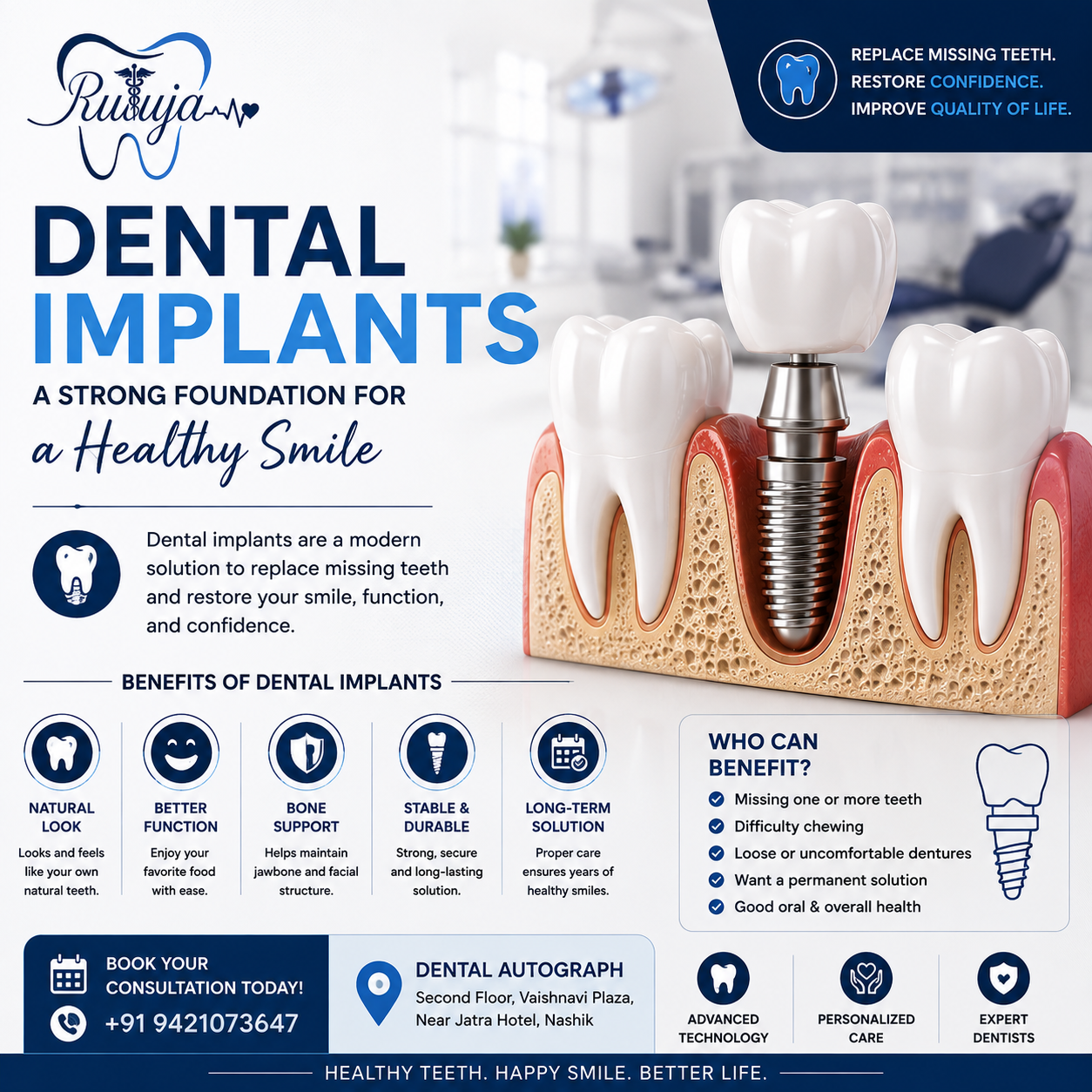
Dental Implant Treatment in Nashik – Restore Your Smile with Confidence Missing teeth can affect your smile, chewing ability, speech, and overall oral health. Fortunately, Dental Implant Treatment in Nashik offers a modern and stable solution for replacing missing teeth and restoring both function and appearance. At Dental Autograph, we provide personalized dental implant solutions based on your oral health, bone support, aesthetic requirements, and individual treatment needs. What Are Dental Implants? A dental implant is an artificial tooth root that is placed into the jawbone to support a replacement tooth. After the implant heals and integrates with the surrounding bone, a customized crown or other dental restoration is attached. Unlike conventional removable dentures, dental implants are designed to provide a fixed and stable tooth-replacement option for suitable patients. When Should You Consider Dental Implants? Dental implants may be considered if you have: One or more missing teeth Difficulty chewing due to missing teeth A loose or uncomfortable denture A missing tooth affecting your smile Several missing teeth requiring a fixed replacement Adequate bone and gum health for implant treatment A professional dental examination is essential to determine whether implants are appropriate for you. Benefits of Dental Implant Treatment 1. Natural-Looking Results Implant-supported crowns can be customized to match the appearance, shape, and shade of your natural teeth. 2. Improved Chewing Function Replacing missing teeth can help improve chewing and make everyday eating more comfortable. 3. Stable Tooth Replacement Dental implants are fixed into the jawbone and can provide greater stability than removable tooth-replacement options. 4. Supports Jawbone Following tooth loss, the surrounding jawbone may gradually change. An implant can provide support in the area of the missing tooth. 5. Restores Smile & Confidence Replacing missing teeth can help you smile, speak, and interact with greater confidence. Types of Dental Implant Solutions The appropriate implant solution depends on the number of missing teeth and your individual oral health. Single Tooth Implant A single dental implant can replace one missing tooth while avoiding the need to rely on adjacent teeth for support. Multiple Dental Implants For patients with several missing teeth, multiple implants may be used to support individual crowns or a fixed bridge. Implant-Supported Bridge Implants can be used to support a bridge when several adjacent teeth are missing. Implant-Supported Full-Mouth Rehabilitation Patients with extensive tooth loss may benefit from a comprehensive treatment plan involving multiple implants and customized restorations. How Does Dental Implant Treatment Work? Step 1 – Consultation Your teeth, gums, bite, and overall oral health are carefully evaluated. Step 2 – Diagnostic Assessment Dental imaging may be recommended to evaluate bone availability and plan the implant position. Step 3 – Personalized Treatment Planning Your dentist prepares a treatment plan according to your clinical condition, functional requirements, and aesthetic goals. Step 4 – Implant Placement The implant is carefully placed into the jawbone using appropriate techniques and anesthesia. Step 5 – Healing The implant is given time to heal and integrate with the surrounding bone. Step 6 – Final Tooth Restoration After appropriate healing, a customized crown, bridge, or other restoration is placed over the implant. Treatment duration varies from patient to patient depending on bone condition, healing, gum health, and the complexity of the case. Are Dental Implants Suitable for Everyone? Dental implants can be an excellent option for many patients, but suitability needs to be assessed individually. Your dentist may evaluate: Bone quantity and quality Gum health Oral hygiene Remaining teeth Bite and jaw relationship Existing dental conditions Overall treatment requirements If additional dental treatment is required before implant placement, it can be discussed during your consultation. How to Care for Dental Implants Proper maintenance is important for the long-term health of your implant and surrounding gums. Brush twice daily. Clean between your teeth as advised by your dentist. Maintain good gum health. Attend regular dental check-ups. Follow professional cleaning recommendations. Follow your dentist’s post-treatment instructions. Why Choose Dental Autograph for Dental Implants in Nashik? At Dental Autograph, every implant case is approached with careful diagnosis and individualized treatment planning. Our goal is to provide comfortable dental care while focusing on function, aesthetics, and long-term oral health. We offer dental solutions for single missing teeth, multiple missing teeth, and comprehensive tooth replacement needs. Dental Implant Treatment Near Jatra Hotel, Nashik If you are searching for Dental Implant Treatment in Nashik, Dental Implants Near Jatra Hotel, or a dental clinic for missing teeth, Dental Autograph is conveniently located at: Dental AutographSecond Floor, Vaishnavi PlazaNear Jatra Hotel, Nashik Our team can evaluate your dental condition and help you understand the most suitable tooth-replacement options. Frequently Asked Questions How long do dental implants last? Dental implants are designed as a long-term tooth-replacement option. Their longevity depends on oral hygiene, gum health, maintenance, lifestyle factors, and regular dental care. Is dental implant treatment painful? The implant placement procedure is performed under appropriate local anesthesia. Some temporary discomfort or swelling may occur during recovery. Can a single missing tooth be replaced with an implant? Yes. A single dental implant can replace one missing tooth in suitable patients. Are implants better than dentures? Both implants and dentures have their own indications and benefits. Implants provide a fixed option for suitable patients, while dentures are removable. Your dentist can recommend the appropriate solution after evaluation. How long does implant treatment take? The treatment timeline varies depending on your bone condition, healing, gum health, and the type of restoration required. Restore Your Missing Teeth with Dental Autograph A missing tooth does not have to affect your smile or everyday life. Dental Implant Treatment in Nashik can offer a stable, functional, and natural-looking solution for suitable patients. If you are considering dental implants, schedule a consultation at Dental Autograph to understand your treatment options. Dental Autograph – Multi-Speciality Dental Clinic📍 Second Floor, Vaishnavi Plaza, Near Jatra Hotel, Nashik📞 +91 9421073647🌐 www.dentalautograph.com Restore your smile. Restore your confidence.
Dental Implant Treatment in Nashik – Restore Your Smile with Confidence
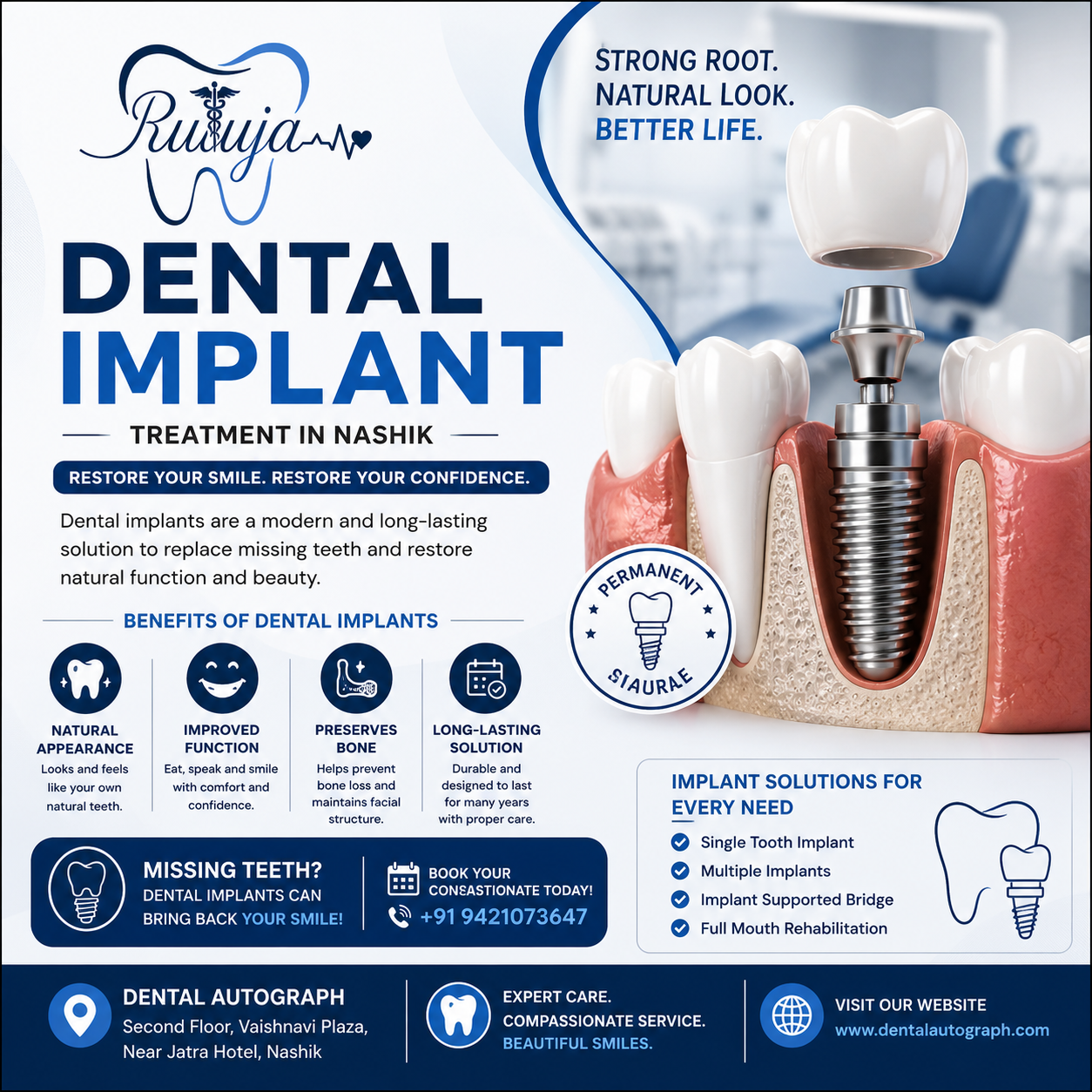
Dental Implant Treatment in Nashik – Restore Your Smile with Confidence Dental Implant Treatment in Nashik is a modern solution for people who have lost one or more teeth. Missing teeth can affect your ability to chew, speak, and smile confidently. Moreover, untreated tooth loss may affect the surrounding teeth and supporting jawbone over time. At Dental Autograph, we provide personalized dental implant solutions based on your oral health, bone support, functional requirements, and aesthetic goals. Our approach focuses on careful diagnosis, appropriate treatment planning, patient comfort, and long-term oral health.
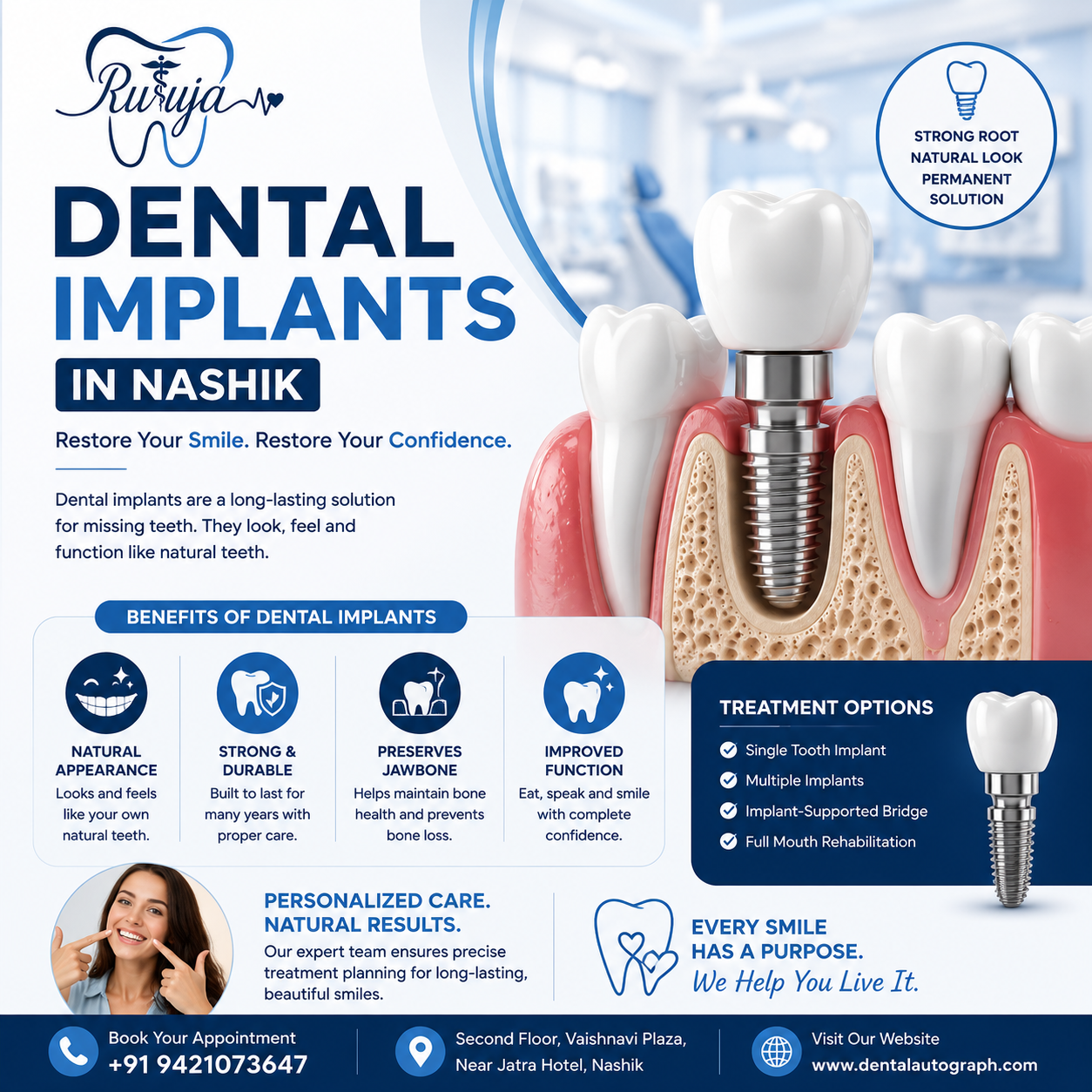
Dental Implants in Nashik | Dental Autograph
Looking for Dental Implants in Nashik? Dental Autograph offers advanced implant treatment near Jatra Hotel to restore missing teeth with natural-looking, long-lasting results. Missing a Tooth? Restore Your Smile with Dental Implants Missing teeth can affect much more than your appearance. They can make chewing difficult, affect speech, cause neighboring teeth to shift, and even lead to gradual jawbone loss. Fortunately, modern Dental Implant Treatment offers a permanent, natural-looking, and highly functional solution for replacing missing teeth. At Dental Autograph, we provide advanced Dental Implant Treatment in Nashik, helping patients regain confidence, restore oral function, and enjoy long-term dental health with personalized treatment plans. What Are Dental Implants? Dental implants are artificial tooth roots made from biocompatible titanium, surgically placed into the jawbone to replace missing teeth. Once the implant integrates with the bone, a custom-made crown is attached, creating a replacement tooth that closely resembles the appearance and function of a natural tooth. Dental implants are considered one of the most reliable and long-lasting tooth replacement options in modern dentistry. Benefits of Dental Implants ✅ Natural Appearance Implants are designed to blend seamlessly with your natural teeth, giving you a beautiful and confident smile. ✅ Improved Chewing Function Enjoy your favorite foods without discomfort while maintaining efficient chewing ability. ✅ Preserve Jawbone Health Dental implants stimulate the jawbone, helping prevent bone loss that commonly occurs after tooth loss. ✅ Long-Term Solution With proper care and regular dental visits, implants can provide excellent long-term results. ✅ Protect Adjacent Teeth Unlike traditional bridges, implants do not require grinding down healthy neighboring teeth. ✅ Better Speech & Confidence Secure implants help improve speech clarity and eliminate concerns about loose or removable dentures. Who Can Benefit from Dental Implants? Dental implants may be suitable for patients who: Have one or more missing teeth Want a fixed alternative to removable dentures Have healthy gums Have adequate jawbone support Maintain good oral hygiene Desire a long-lasting tooth replacement solution A comprehensive clinical examination and radiographic evaluation are essential to determine whether dental implants are the right option for you. Types of Dental Implant Treatments Single Tooth Implant Replaces one missing tooth without affecting adjacent teeth. Multiple Dental Implants Ideal for replacing several missing teeth while preserving oral function. Implant-Supported Bridge Suitable when multiple adjacent teeth are missing. Full Mouth Rehabilitation with Implants A comprehensive solution for patients missing most or all of their teeth. Dental Implant Treatment Process Step 1 – Consultation & Evaluation Comprehensive examination, digital X-rays, and treatment planning. Step 2 – Implant Placement The titanium implant is carefully placed into the jawbone under local anesthesia. Step 3 – Healing Phase The implant gradually integrates with the surrounding bone through a natural healing process called osseointegration. Step 4 – Crown Placement A custom-designed dental crown is securely attached, restoring both function and aesthetics. Why Choose Dental Autograph for Dental Implants in Nashik? At Dental Autograph, we combine advanced technology with personalized care to deliver predictable implant outcomes. Our Advantages Advanced Digital Diagnosis Personalized Treatment Planning Evidence-Based Dentistry High Standards of Sterilization Patient-Centered Care Modern Implant Techniques Comfortable Clinical Environment Comprehensive Dental Care Under One Roof Meet Your Dentist Your treatment is planned and coordinated by Dr. Rutuja Fuldeore, MDS (Conservative Dentistry & Endodontics), who is committed to providing ethical, evidence-based dental care with a focus on long-term oral health and patient satisfaction. Conveniently Located Near Jatra Hotel, Nashik Dental Autograph is conveniently situated at: Dental AutographSecond Floor, Vaishnavi PlazaNear Jatra HotelNashik – 422003 We proudly serve patients from: Panchavati Adgaon Dwarka Mumbai Naka Hirawadi Makhmalabad CIDCO Nashik Road And surrounding areas. Frequently Asked Questions Is Dental Implant Treatment Painful? Dental implant placement is performed under local anesthesia, making the procedure comfortable for most patients. Mild discomfort after the procedure is generally temporary. How Long Do Dental Implants Last? With proper oral hygiene, regular dental check-ups, and professional maintenance, dental implants can provide long-lasting results. Are Dental Implants Better Than Dentures? Dental implants offer excellent stability, preserve jawbone health, and closely mimic natural teeth. The ideal treatment depends on your oral condition and clinical evaluation. Book Your Dental Implant Consultation Today If you are looking for Dental Implant Treatment in Nashik, Tooth Implants Near Jatra Hotel, or a trusted Implant Dentist in Nashik, Dental Autograph is here to help. Restore your smile, improve your confidence, and enjoy the benefits of a healthy, functional smile with advanced dental implant solutions. Contact Us Dental Autograph 📍 Second Floor, Vaishnavi Plaza, Near Jatra Hotel, Nashik – 422003 📞 Call: +91 9421073647 📧 dentalautograph@gmail.com 🌐 www.dentalautograph.com
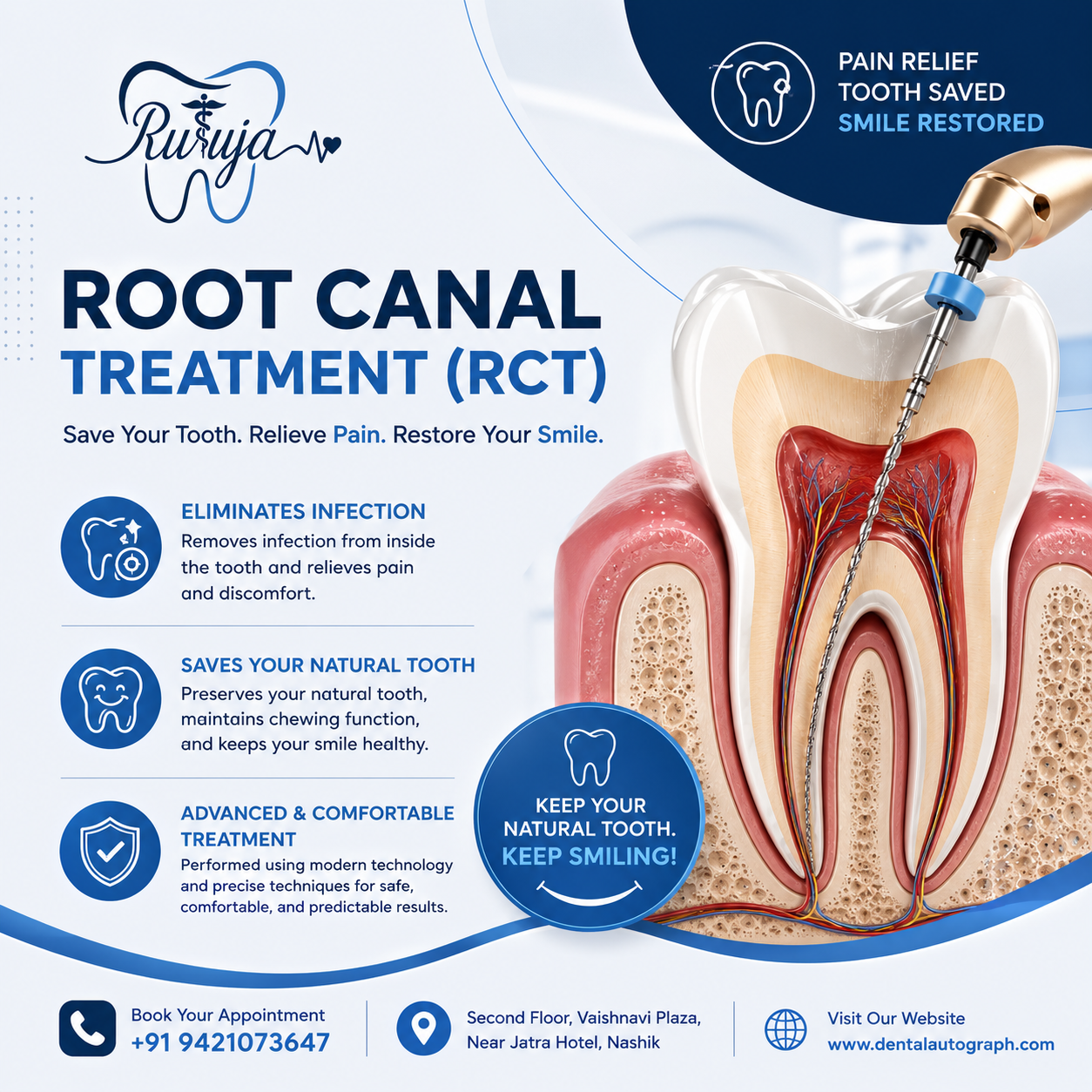
Root Canal Treatment Near Me in Nashik | Expert Endodontic Care Near Jatra Hotel
Looking for the Best Root Canal Treatment Near You? If you’re searching for Root Canal Treatment near me, Root Canal Treatment in Nashik, or a trusted dentist near Jatra Hotel, Nashik, finding the right dental clinic is essential for preserving your natural tooth and relieving pain. At Dental Autograph, we provide advanced, evidence-based Root Canal Treatment (RCT) using modern dental technology and precise treatment techniques. Our goal is to eliminate infection, relieve discomfort, and save your natural tooth while ensuring a comfortable treatment experience. What is Root Canal Treatment? A Root Canal Treatment (RCT) is a specialized dental procedure performed to remove infected or damaged pulp (the soft tissue inside the tooth). After carefully cleaning and disinfecting the root canals, the tooth is sealed to prevent reinfection and restored to its normal function. Modern Root Canal Treatment is a safe, predictable, and highly successful procedure that helps preserve your natural teeth. Signs You May Need a Root Canal Treatment You may require Root Canal Treatment if you experience: Persistent or severe toothache Sensitivity to hot or cold that lingers Pain while chewing or biting Swollen or tender gums around a tooth Deep cavities or extensive tooth decay Tooth discoloration following trauma A dental abscess or recurrent gum swelling If you notice any of these symptoms, it’s important to visit a qualified dentist for an examination. Benefits of Root Canal Treatment Choosing Root Canal Treatment offers several advantages: ✅ Relieves Tooth Pain Removes the source of infection and significantly reduces discomfort. ✅ Preserves Your Natural Tooth Saving your natural tooth helps maintain proper chewing, speech, and bite alignment. ✅ Prevents Infection from Spreading Timely treatment helps protect neighboring teeth and surrounding bone. ✅ Restores Function Following treatment, the tooth can often function normally for many years with appropriate restoration and care. ✅ Avoids Tooth Extraction Whenever possible, preserving a natural tooth is preferable to removing and replacing it. Why Choose Dental Autograph for Root Canal Treatment in Nashik? At Dental Autograph, every Root Canal Treatment is performed with a focus on precision, patient comfort, and long-term oral health. Our Approach Includes: Advanced diagnostic technology Modern endodontic treatment techniques Personalized treatment planning Comfortable, patient-centered care Ethical and evidence-based dentistry High standards of sterilization and safety Our priority is to preserve your natural tooth whenever clinically appropriate. Meet Our Root Canal Specialist Your treatment is provided by Dr. Rutuja Fuldeore, MDS (Conservative Dentistry & Endodontics). Dr. Fuldeore specializes in: Root Canal Treatment (RCT) Repeat Root Canal Treatment (Re-RCT) Dental Trauma Management Aesthetic Restorations Complex Endodontic Cases Tooth Preservation With advanced training and a commitment to continuing education, she focuses on delivering precise, comfortable, and predictable treatment outcomes. Conveniently Located Near Jatra Hotel, Nashik Dental Autograph is conveniently located at: Dental AutographSecond Floor, Vaishnavi PlazaNear Jatra HotelNashik, Maharashtra – 422003 Our central location makes us easily accessible for patients from: Jatra Hotel Panchavati Adgaon Dwarka Mumbai Naka CBS Nashik Hirawadi Makhmalabad CIDCO Nashik Road Nearby areas across Nashik Frequently Asked Questions Is Root Canal Treatment painful? Modern Root Canal Treatment is performed using local anesthesia and advanced techniques, making the procedure comfortable for most patients. How many visits are required? Depending on the condition of the tooth, treatment may be completed in one or more appointments. Your dentist will recommend the most appropriate treatment plan. How long does a Root Canal-treated tooth last? With proper restoration, good oral hygiene, and regular dental check-ups, a Root Canal-treated tooth can remain functional for many years. Book Your Consultation Today If you’re experiencing persistent tooth pain, swelling, or sensitivity, don’t delay treatment. Early diagnosis can help preserve your natural tooth and prevent more extensive dental problems. At Dental Autograph, we are committed to providing advanced Root Canal Treatment with a focus on patient comfort, precision, and long-term oral health. Contact Us 📍 Dental AutographSecond Floor, Vaishnavi Plaza, Near Jatra Hotel, Nashik – 422003 📞 Call: +91 9421073647 Schedule your consultation today and take the first step toward a healthier, pain-free smile.
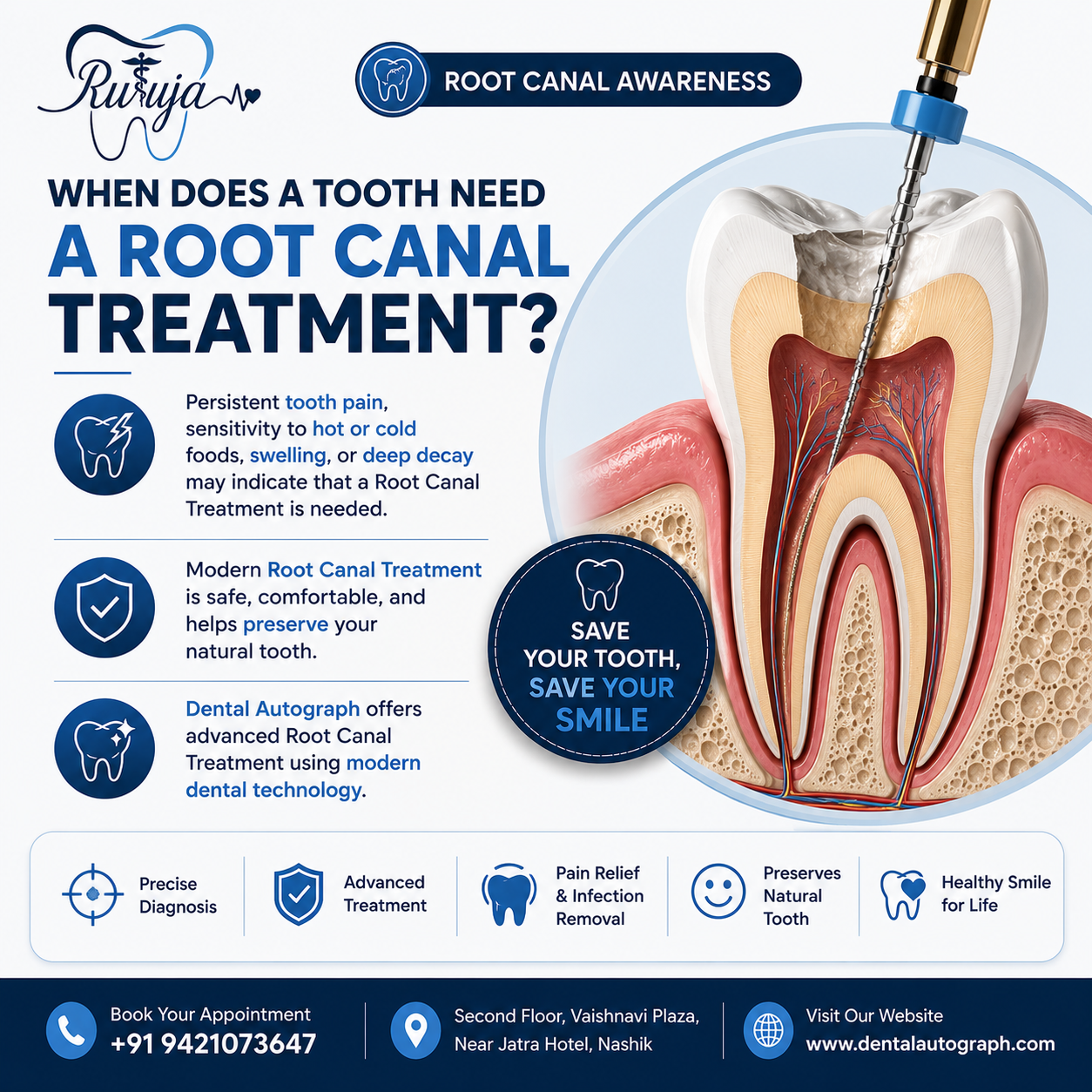
When Does a Tooth Need a Root Canal Treatment?
A persistent toothache is more than just an inconvenience—it may be a sign of an infection deep inside the tooth. When the soft tissue (dental pulp) becomes infected due to deep decay, cracks, trauma, or repeated dental procedures, a Root Canal Treatment (RCT) can help save your natural tooth and eliminate the infection. Thanks to modern dental technology, Root Canal Treatment is a safe, comfortable, and highly effective procedure that preserves your natural smile while relieving pain. What Is Root Canal Treatment? Root Canal Treatment is a specialized procedure that removes infected or damaged pulp from inside the tooth. The canals are carefully cleaned, disinfected, shaped, and sealed to prevent future infection. In most cases, the tooth is then restored with a filling or crown to regain its strength and function. The goal of Root Canal Treatment is to preserve your natural tooth whenever possible, avoiding the need for extraction. Signs You May Need a Root Canal Treatment You should consult a dentist if you experience any of the following symptoms: 🦷 Persistent or severe tooth pain ❄️ Prolonged sensitivity to hot or cold foods and beverages 😣 Pain while chewing or biting 😷 Swelling or tenderness around the affected tooth 🔴 Gum swelling or a pimple-like bump near the tooth ⚫ Deep cavities or extensive tooth decay 🩹 A cracked or injured tooth causing pulp damage Only a comprehensive dental examination and X-rays can determine whether Root Canal Treatment is the right solution. Benefits of Root Canal Treatment Modern Root Canal Treatment offers several important advantages: Relieves pain and discomfort by removing the source of infection. Preserves your natural tooth, maintaining normal chewing function and bite alignment. Prevents the spread of infection to surrounding teeth and tissues. Restores normal function with long-lasting results. Avoids unnecessary tooth extraction whenever possible. Is Root Canal Treatment Painful? One of the biggest misconceptions about Root Canal Treatment is that it is painful. In reality, modern techniques, advanced equipment, and effective local anesthesia make the procedure comfortable for most patients. Most people experience relief from the pain caused by the infection after treatment. Why Early Treatment Is Important Ignoring an infected tooth can allow the infection to worsen, potentially leading to: Severe pain Dental abscess formation Swelling of the face or gums Bone loss around the tooth Eventual tooth loss Seeking treatment early improves the chances of saving your natural tooth and minimizes the need for more complex procedures. Advanced Root Canal Treatment at Dental Autograph At Dental Autograph, Dr. Rutuja Fuldeore (MDS – Conservative Dentistry & Endodontics) provides advanced Root Canal Treatment using modern technology and evidence-based techniques. Every procedure is performed with precision, patient comfort, and long-term success in mind. Our approach focuses on: Accurate diagnosis and personalized treatment planning Advanced endodontic techniques for predictable outcomes Comfortable and minimally invasive care Preservation of your natural teeth whenever possible Protect Your Natural Smile If you’re experiencing persistent tooth pain, sensitivity, or swelling, don’t ignore the warning signs. Early diagnosis and timely Root Canal Treatment can relieve pain, eliminate infection, and help preserve your natural tooth for years to come. Schedule your consultation with Dental Autograph today and take the first step toward a healthier, pain-free smile.
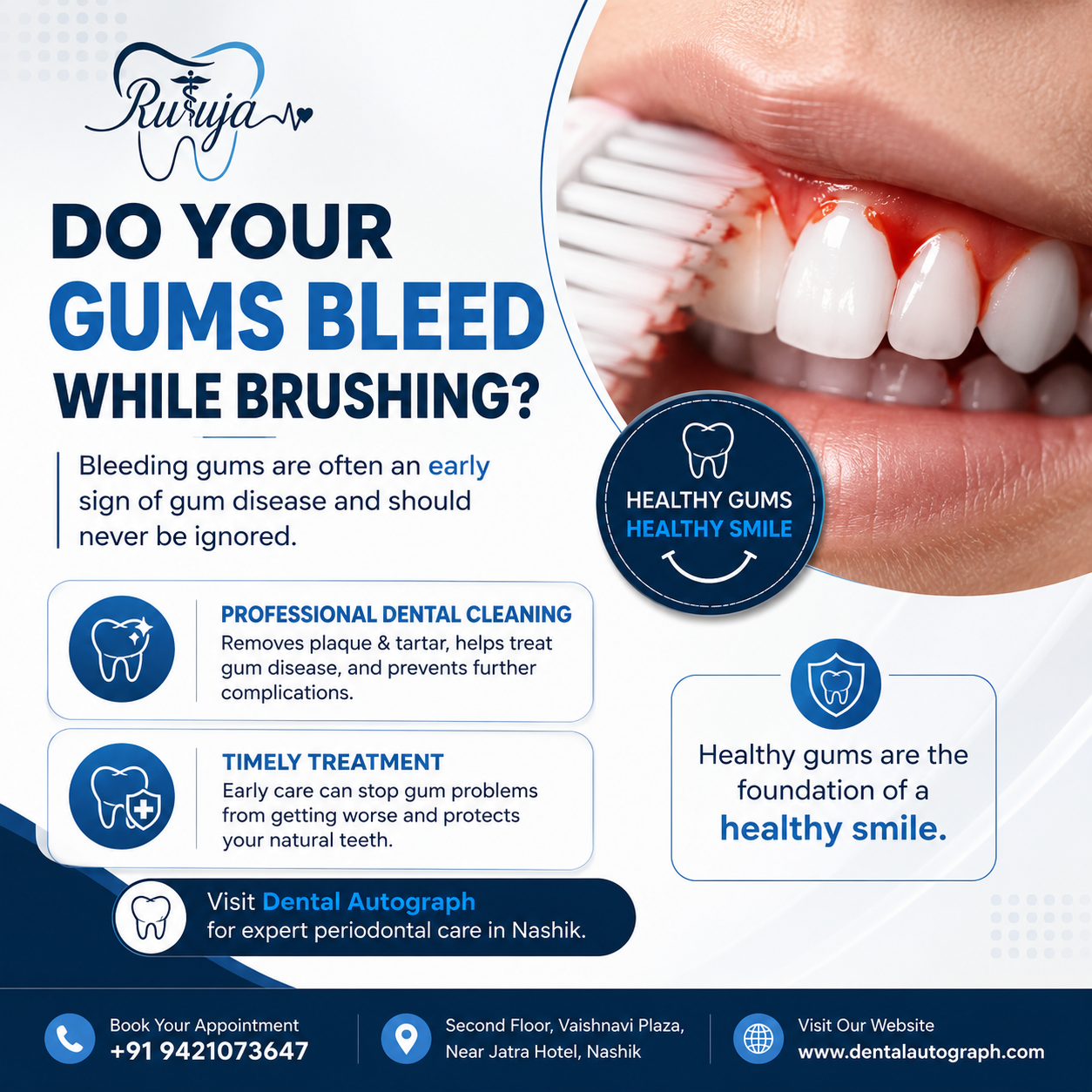
Do Your Gums Bleed While Brushing? Don’t Ignore This Early Warning Sign
Healthy gums are the foundation of strong teeth and a beautiful smile. While occasional gum bleeding may seem harmless, it is often one of the earliest signs that your gums need professional attention. Ignoring bleeding gums can allow the condition to progress, potentially leading to more serious oral health problems over time. Why Do Gums Bleed? Bleeding gums commonly occur due to the buildup of plaque and tartar around the teeth and gum line. If not removed through proper oral hygiene and professional cleaning, these deposits can irritate the gums, causing inflammation known as gingivitis. Without timely treatment, gingivitis may progress to periodontitis, a more advanced form of gum disease that can damage the supporting structures of the teeth. Other factors that may contribute to bleeding gums include: Inadequate brushing and flossing Plaque and tartar accumulation Vitamin deficiencies Smoking or tobacco use Hormonal changes Certain medical conditions or medications Common Signs of Gum Disease Watch for these early warning signs: 🩸 Bleeding while brushing or flossing 🔴 Red, swollen, or tender gums 😷 Persistent bad breath 🦷 Receding gums 🪥 Loose teeth in advanced stages If you notice any of these symptoms, it is important to schedule a dental examination promptly. Why Early Treatment Matters Treating gum disease in its early stages is simple and highly effective. Professional dental cleaning removes plaque and tartar that cannot be eliminated with regular brushing alone. Early intervention helps: Prevent progression of gum disease Protect the supporting bone around your teeth Reduce bleeding and inflammation Improve oral hygiene and freshen breath Preserve your natural teeth for the long term How to Keep Your Gums Healthy Maintaining healthy gums is an essential part of overall oral health. Follow these simple habits: Brush your teeth twice daily using a soft-bristled toothbrush. Clean between your teeth daily with dental floss or interdental brushes. Visit your dentist every six months for professional cleaning and routine check-ups. Eat a balanced diet rich in vitamins and minerals. Avoid tobacco products, which significantly increase the risk of gum disease. Expert Periodontal Care at Dental Autograph At Dental Autograph, we provide comprehensive periodontal (gum) care using modern techniques and a personalized treatment approach. Whether you need preventive care, professional scaling, or advanced gum treatment, our goal is to restore your gum health and help you maintain a healthy smile for years to come. Healthy Gums. Healthy Smile. Healthy Life. If your gums bleed while brushing, don’t wait for the problem to become more serious. Early diagnosis and timely treatment can protect your teeth and preserve your oral health. Book your consultation with Dental Autograph today and take the first step toward healthier gums and a confident smile.
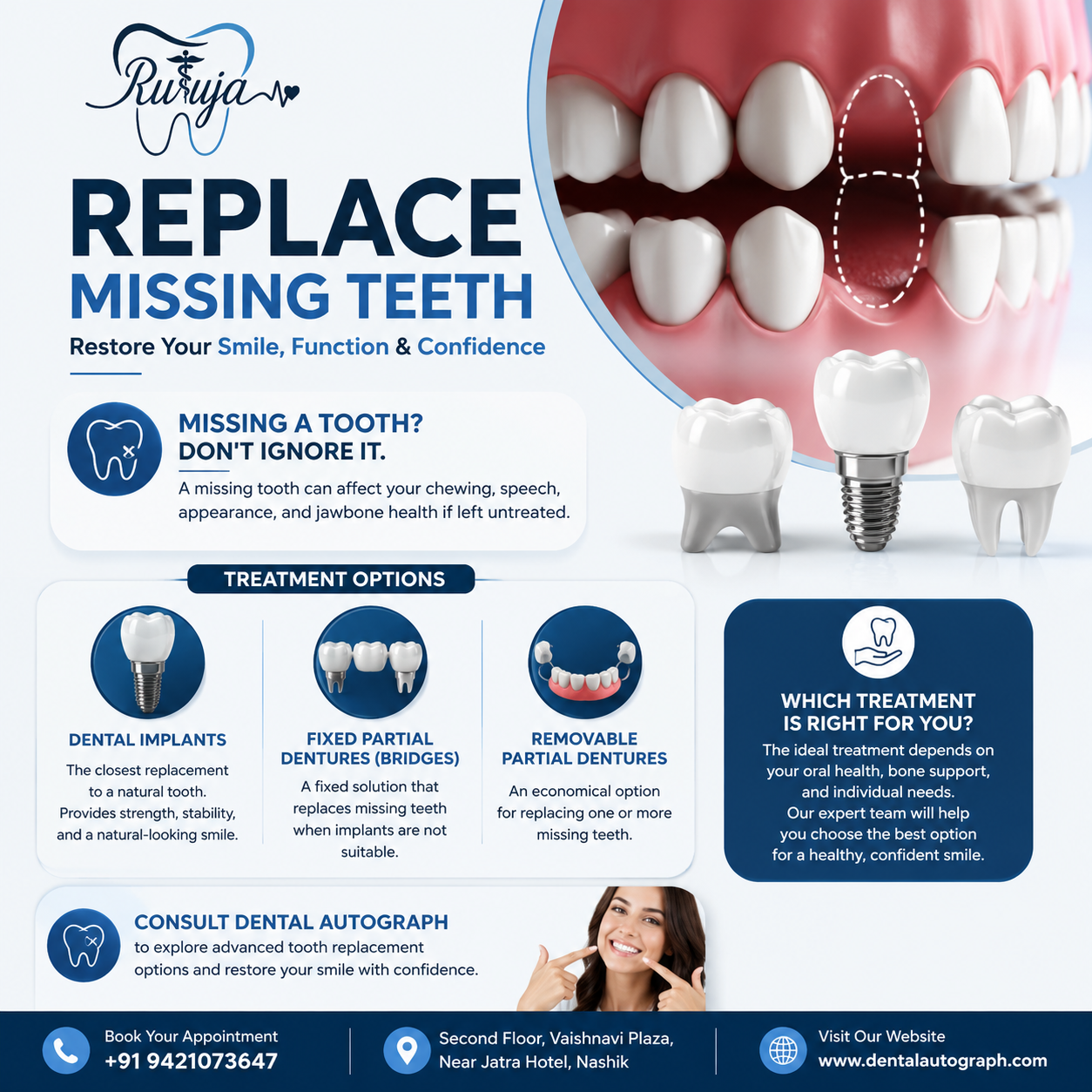
Replace Missing Teeth: Restore Your Smile, Function & Confidence
Missing a Tooth? Don’t Ignore It. Losing a tooth is more than just a cosmetic concern. Missing teeth can affect your ability to chew comfortably, speak clearly, maintain proper bite alignment, and preserve the health of your jawbone. Over time, neighboring teeth may shift into the empty space, leading to additional oral health problems. Fortunately, modern dentistry offers several reliable and effective tooth replacement options tailored to your individual needs. Treatment Options 🦷 Dental ImplantsDental implants are the closest replacement to natural teeth. They provide exceptional stability, restore chewing efficiency, help preserve jawbone health, and deliver a natural-looking smile. 🦷 Fixed Partial Dentures (Dental Bridges)A dental bridge is a fixed restoration that replaces one or more missing teeth by anchoring to adjacent healthy teeth. It is an excellent option when dental implants are not suitable. 🦷 Removable Partial DenturesRemovable partial dentures offer an economical and practical solution for replacing multiple missing teeth while restoring function, appearance, and confidence. Which Treatment Is Right for You? The most suitable tooth replacement option depends on several factors, including your oral health, jawbone condition, number of missing teeth, overall medical history, and personal preferences. A comprehensive dental evaluation helps determine the treatment that best meets your functional and aesthetic goals. Restore Your Smile with Confidence At Dental Autograph, we provide personalized, evidence-based tooth replacement solutions using advanced techniques and high-quality materials. Our goal is to restore your smile, improve oral function, and help you enjoy long-lasting dental health. Schedule your consultation today and discover the best solution to replace your missing teeth with confidence.
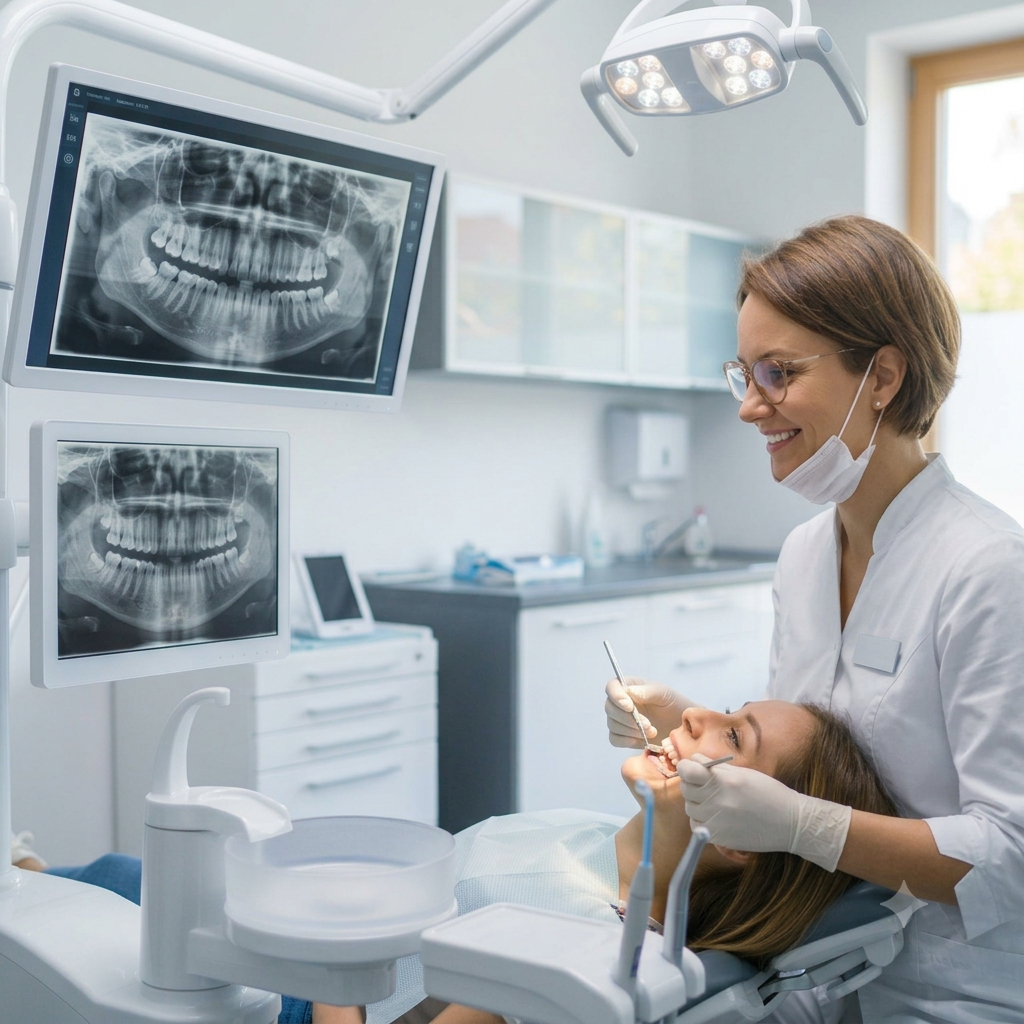
The Importance of Regular Dental Check-ups
Prevention Is the Best Dental Treatment Many dental problems develop silently without causing pain in their early stages. Regular dental check-ups help identify issues before they become serious, reducing the need for extensive treatment. Why Are Regular Check-ups Important? Routine dental visits help detect: Tooth decay Gum disease Oral infections Worn fillings Cracked teeth Oral cancer Bite problems Early diagnosis allows for simpler and more affordable treatment. Professional Cleaning Matters Even with excellent brushing and flossing habits, plaque and tartar can accumulate in hard-to-reach areas. Professional cleaning helps: Remove tartar deposits Prevent gum disease Reduce bad breath Lower the risk of cavities Keep teeth looking clean and healthy How Often Should You Visit the Dentist? Most people should schedule a dental check-up every six months. However, patients with gum disease, diabetes, orthodontic treatment, or other oral health concerns may require more frequent visits. Tips for Better Oral Health Brush twice daily using fluoride toothpaste Floss every day Limit sugary foods and beverages Drink plenty of water Avoid tobacco products Visit your dentist regularly Conclusion Regular dental check-ups are one of the easiest ways to maintain healthy teeth and gums throughout your life. Preventive care not only protects your smile but also reduces the need for complex dental treatments in the future.